Feast of St Kevin, June 3, 2026, St Mary’s Cathedral, Dublin
Homily of Archbishop Dermot Farrell
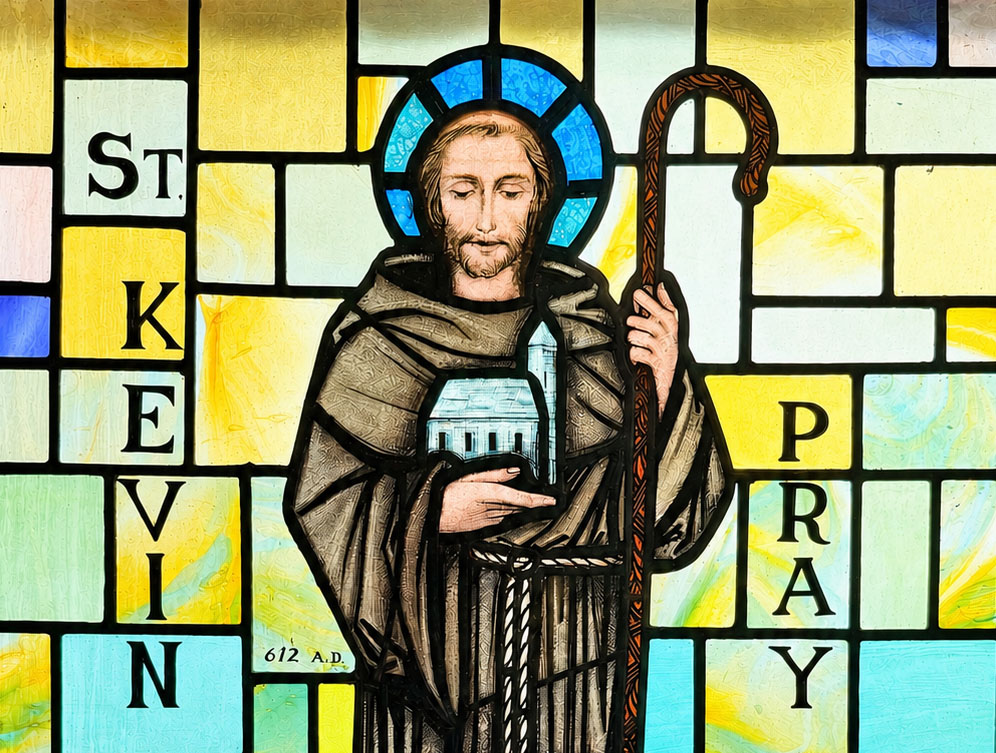
Archbishop Dermot Farrell celebrated Mass in St Mary’s Cathedral, Dublin, on Wednesday, June 3, for the Feast of St Kevin. St Kevin of Glendalough is one of the principal patrons of the Archdiocese of Dublin. In the Archbishop’s homily, he called for the Church to recognise and encourage the gifts already present among the people of the Archdiocese for ministry, leadership and service. Using example of St Kevin, he called on people to discover the “hidden treasure” of a living relationship with God and to help others encounter that same faith.
(Also available at https://www.dublindiocese.ie/
The Hidden Life of the Church
In every parish in our diocese, there are people of deep faith and profound commitment: people whose prayer is genuine and regular, for whom the sacraments, especially the Eucharist, are places of consolation and nourishment, and whose way of living is rooted in a genuine commitment to the way of living Christ puts before the world. These might not be the words they’d use to describe themselves, but they are the living Church in our parishes. They give of their gifts to parish pastoral councils, prayer groups, youth groups, sacramental preparation groups for the children, funeral ministry, finance committees; they reach out the poor and disadvantaged in their own communities and beyond. However, this life of the Church, and this is the real life of the Church, often remains somehow hidden, not only to the world, but also to the Church itself. It is a treasure that remains hidden to us. And it is on this hidden treasure that I’d like to reflect on with you on this Feast of St Kevin today.
The Sadducees and Jesus—Two Responses to What God is Doing in the World
In today’s Gospel (Mark 12:18–27), we have an encounter between Jesus and the Sadducees. The Sadducees find their way into the Gospels, not merely as witnesses to what Jesus was involved with, but because the values they embodied were also to be found in the early Church. Saint Mark is saying to the parishes that make up his community, “Do you remember that drama between Jesus and the Sadducees in the Temple? Well, what is going on among you is exactly the same thing!”
Like the Pharisees, the Sadducees were religious people. Their forebears had rebuilt the temple in Jerusalem, and they ran it in Jesus’ day. They were the custodians of the tradition, but the Sadducees understood their faith in a very worldly way. The horizon of their faith was what they could imagine, and they imagined things in a very mundane way. The evangelists tell us, again and again, that they had no belief in the resurrection (see Mark 12:18). In other words, what was real was what they saw. Today we might say, that they had no sense of mystery. They had little sense of the possibilities or horizons of God.
In the early Church, there were many people who shared that pragmatic horizon of the Sadducees, what one might call the values of the “establishment.” If God had acted, then God had acted along the way they deemed possible and would continue to act in the way they deemed important. Their Christian ‘beliefs’ were founded on what was possible for them, not what was possible for God. Yes, they believed in Jesus, but they believed in Jesus in a very worldly way.
However, the victory of Jesus was not a victory in worldly way. The victory of Jesus was the victory of the cross. It was the victory of compassion; it was the victory of gentleness, not of brute force. It was the victory of turning the other cheek (see Matt 5:41), it was—and is—the victory of the “poor in spirit” (see Matt 5:3). It is the victory of forgiveness and patience, of littleness and simplicity, and it is costly.
Christ’s Way—Another Way of Being in the World
The victory of Christ is a victory that bears witness to another way of being in the world. The Sadducees are caught up in another victory—a victory in the past. Their forebears had returned from the exile in Babylon (597–538 BCE), rebuilt the Jerusalem temple, and in a real way, re-established the faith of their fathers, the faith of Abraham, and Isaac, and Jacob (see Gen 3:6, cf. Mark 12:26–27). That said, their horizon was in the past.
Today’s Gospel story is not really a theological argument about resurrection: it is far more an argument about what God can do. Jesus says the resurrection is beyond the Sadducees’ horizon, because they know neither the Scriptures nor the power of God. They do not know the Scriptures—the story of God with his people, and they do not know what God can do, they cannot imagine the possibilities of God.